

 By
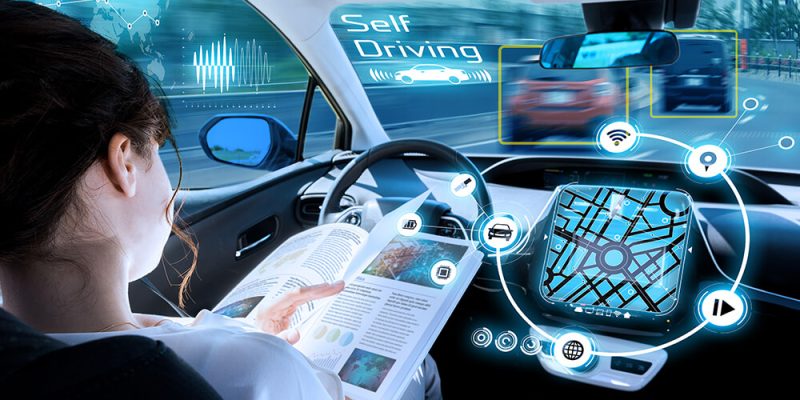
By Autonomous driving technology is steadily transforming how people think about mobility, safety, and transportation infrastructure. What began as experimental driver-assistance features has evolved into advanced systems capable of navigating complex environments with minimal human involvement. Over the coming decade, the integration of artificial intelligence, sensor fusion, connectivity, and regulatory progress is expected to redefine the role of vehicles in daily life.
This article explores the technological evolution, current capabilities, future possibilities, challenges, and long-term societal impact of autonomous driving systems.
Understanding Autonomous Driving Technology
Autonomous vehicles (AVs) rely on a combination of artificial intelligence, machine learning, cameras, radar, LiDAR, GPS, and onboard computing systems to interpret surroundings and make driving decisions in real time.
Engineers categorize autonomy into multiple levels ranging from basic driver assistance to full automation:
- Level 0: No automation
- Level 1: Driver assistance (adaptive cruise control)
- Level 2: Partial automation (lane centering + cruise control)
- Level 3: Conditional automation (hands-off in certain conditions)
- Level 4: High automation (self-driving in defined environments)
- Level 5: Full automation (no human driver required)
Currently, most commercial vehicles operate at Level 2, while testing environments are approaching Level 4 capabilities.
Core Technologies Powering Autonomous Vehicles
Autonomous driving systems depend on several interconnected technologies working together seamlessly.
1. Sensor Fusion Systems
Vehicles combine data from multiple sensors to understand surroundings accurately:
- Cameras detect lanes, signs, pedestrians
- Radar measures speed and distance
- LiDAR builds 3D environmental maps
- Ultrasonic sensors assist with close-range navigation
Together, they create a real-time digital interpretation of the road environment.
2. Artificial Intelligence and Machine Learning
AI enables vehicles to:
- Recognize objects
- Predict movement patterns
- Interpret traffic scenarios
- Adapt to unexpected situations
Continuous learning from millions of driving miles improves performance over time.
3. High-Performance Computing Platforms
Modern autonomous vehicles function like mobile data centers. Their onboard processors:
- Analyze sensor input instantly
- Execute driving decisions
- Maintain redundancy for safety
- Support real-time navigation adjustments
These computing systems are becoming more efficient and energy optimized each year.
4. Vehicle-to-Everything (V2X) Communication
Connected vehicles exchange information with:
- Other vehicles
- Traffic lights
- Infrastructure systems
- Cloud-based traffic platforms
This connectivity improves route optimization, collision prevention, and traffic coordination.
Benefits Expected from Autonomous Driving 🚦
The future adoption of autonomous driving technology promises several meaningful advantages.
Improved Road Safety
Human error contributes to most road accidents globally. Autonomous vehicles can:
- Maintain safe distances
- Detect hazards instantly
- Avoid distractions
- Respond faster than human drivers
This could significantly reduce accident rates over time.
Enhanced Mobility Access
Self-driving vehicles may improve transportation access for:
- Elderly individuals
- People with disabilities
- Non-drivers
- Rural populations
Mobility could become more inclusive than ever before.
Reduced Traffic Congestion
Smart routing and synchronized vehicle movement can:
- Minimize stop-and-go traffic
- Improve highway efficiency
- Reduce travel time variability
Urban traffic systems may become more predictable and efficient.
Environmental Efficiency
Autonomous vehicles can optimize:
- Speed control
- Route selection
- Accelaration patterns
These adjustments support lower fuel consumption and reduced emissions.
Challenges Slowing Widespread Adoption ⚠️
Despite progress, several technical and social challenges remain.
Regulatory Complexity
Governments worldwide are still developing policies for:
- Liability responsibility
- Safety certification
- Data protection
- Operational boundaries
Uniform global regulations are unlikely in the near future.
Infrastructure Limitations
Autonomous vehicles perform best with supportive infrastructure such as:
- Smart traffic signals
- High-definition mapping
- Reliable connectivity networks
Many regions are still preparing for this transition.
Ethical Decision-Making
AI systems must handle complex driving scenarios involving risk assessment. Determining acceptable decision frameworks continues to be an active area of research.
Cybersecurity Risks
Connected vehicles must remain protected against:
- Remote interference
- Data manipulation
- System hijacking attempts
Security architecture is becoming a major priority in AV development.
Emerging Trends Shaping the Next Decade
Several developments are accelerating progress toward full autonomy.
Expansion of Robotaxi Services
Autonomous ride-sharing fleets are already being tested in select cities. These services could:
- Reduce private car ownership
- Lower transportation costs
- Improve urban space utilization
Integration with Smart Cities
Future transportation networks may combine:
- intelligent traffic lights
- connected highways
- predictive traffic analytics
- automated parking ecosystems
Vehicles will increasingly interact with city infrastructure rather than operate independently.
Advances in Edge Computing
Faster onboard decision-making will allow vehicles to respond instantly without relying entirely on cloud connectivity.
This improves both safety reliability and operational independence.
Growth of Autonomous Freight Transport
Long-distance logistics is among the earliest sectors likely to adopt self-driving systems widely because routes are predictable and highway environments are structured.
Autonomous trucks could transform supply chains globally.
Long-Term Impact on Society 🌍
Autonomous driving technology may reshape transportation ecosystems in several lasting ways.
Possible future outcomes include:
- Reduced need for parking infrastructure
- Transformation of vehicle ownership models
- Increased productivity during travel time
- Growth of mobility-as-a-service platforms
- Improved urban land utilization
Cities could gradually shift from car-centered planning to mobility-centered planning.
What Industries Will Benefit the Most?
Autonomous driving technology will influence multiple sectors beyond automotive manufacturing.
Key beneficiaries include:
- Logistics and delivery services
- Public transportation systems
- Insurance providers
- Smart infrastructure developers
- Urban planning agencies
- Mobility platform operators
The ripple effect may extend into employment structures and city development strategies.
The Road Ahead for Autonomous Driving
The transition toward fully autonomous mobility will not happen overnight. Instead, it will unfold gradually through incremental improvements in safety systems, connectivity, infrastructure readiness, and public trust.
Over time, autonomous driving will likely evolve from a convenience feature into a foundational component of modern transportation networks.
Frequently Asked Questions (FAQs)
1. Will autonomous vehicles eliminate the need for driving licenses?
Not immediately. Human oversight will remain necessary for years until full automation becomes reliable across all environments.
2. Can autonomous vehicles operate safely in extreme weather conditions?
Performance currently declines in heavy rain, fog, or snow because sensors may struggle to interpret surroundings accurately. Improvements are ongoing.
3. How will autonomous vehicles affect insurance policies?
Insurance models may shift from driver-focused liability toward manufacturer and software responsibility frameworks.
4. Are autonomous vehicles energy efficient compared to traditional vehicles?
Yes, optimized driving behavior and intelligent routing typically reduce unnecessary acceleration and fuel consumption.
5. Will rural areas benefit from autonomous transportation?
Yes. Autonomous mobility services could improve accessibility where public transportation options are limited.
6. How expensive will autonomous vehicles be initially?
Early versions are expected to remain costly due to advanced hardware, but prices should decrease as production scales.
7. Could autonomous vehicles reduce commuting stress?
Yes. Removing the need for manual driving allows passengers to relax, work, or engage in other activities during travel.







Comments